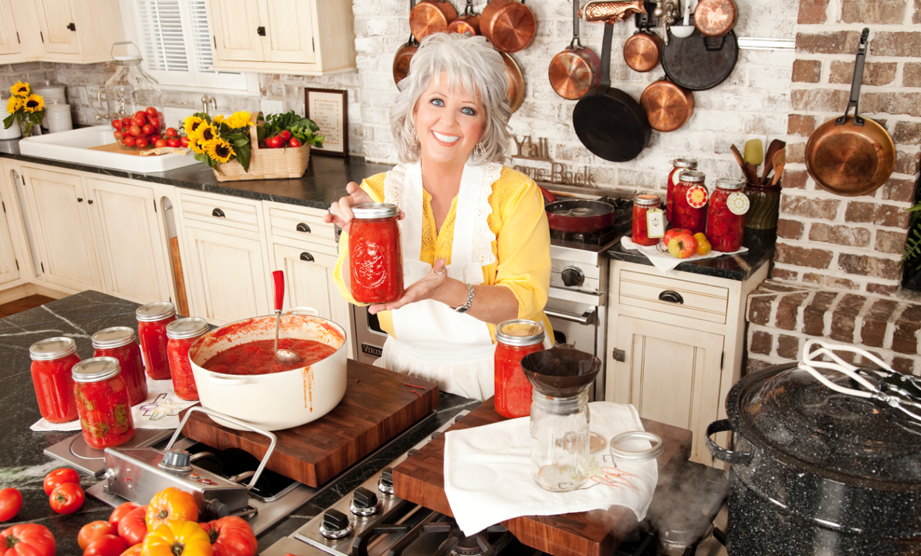
It is true that canning and preserving took a hiatus for a few decades. With the advent of supermarkets and expanded varieties of jams, jellies, pickles, and canned produce, you could buy anything you wanted. But, today we are experiencing a revival of eating minimally processed and organic foods. With home canning, we can capture fruits and vegetables at their height of flavor and peak of nutrient development. Whether we purchase them at farmer’s markets or harvest them ourselves, we can preserve them as jelly or jam on the same day to retain that treasured fresh taste. We can pluck tomatoes off the vine at their developmental zenith and they will contain greater concentrations of nutrients. From farm-to-table, home canning is the optimum way to capture and preserve fresh taste and maximum nutrition of summer produce.
Doing it right is important, but if you have the equipment ready and break the process into steps, your first time will be a success. You will have confidence that you have sealed the jars safely for long-term storage, and go forth on a quest to try a new canning project!
What You Need
Hot, Water-Bath or Pressure Canner? The canner itself is the most important piece of equipment. All high-acid foods go into a hot-water-bath canner. That means fruit products such as jams, jellies, preserves, marmalades, chutneys, fruit butters, and anything pickled with vinegar like pickles and relishes. Tomatoes are high in acid and are canned in a hot-water-bath canner. (You can use a large stockpot with a lid, but you must have a rack in the bottom to keep the jars away from direct heat.)
Low acid foods, such as non-pickled vegetables (except tomatoes), dried beans, meats, and poultry, must be processed in a pressure canner.
Both methods heat the ingredients in the canning jar enough to create a vacuum and kill off any potentially harmful bacteria.
Other Basic Equipment:
Helpful Hints Before You Start
Canning Steps
Step 1: Be Prepared
Read the entire recipe and familiarize yourself with the instructions. Assemble equipment and ingredients.
Step 2: Check and Clean Equipment
Check jars for nicks, cracks, or uneven rims that will prevent sealing or cause breakage. Lids should be unused and clear of scratches; sealing screw bands should fit on jars. Then wash all in hot, soapy water and dry thoroughly.
Step 3: Heat the Jars
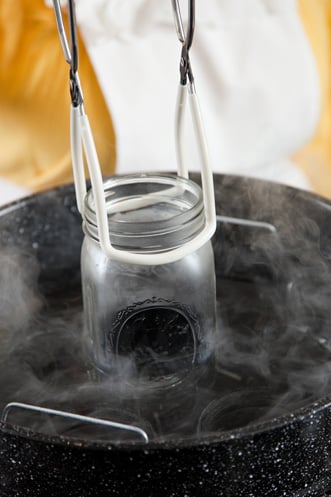
Keep jars hot to prevent them from breaking when filling with hot food: Fill a large saucepan halfway with water; place the jars in the water and make sure they are completely submerged. Bring the water to a simmer, and keep jars in the simmering water until you are ready to fill and seal them. Alternately, you can use a dishwasher to wash and heat the jars.

Step 4: Heat the Lids and Screw bands
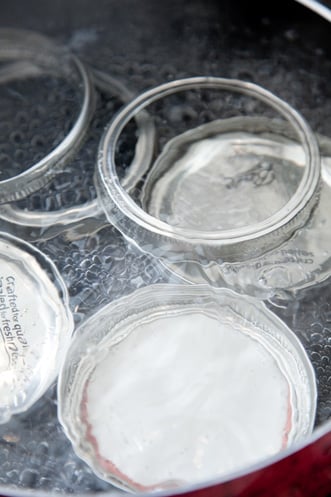
Keep lids and screw bands hot in a small saucepan of simmering water until ready to use. Do NOT boil.
Step 5: Prepare the Canner
Prepare the hot-water-bath canner by filling halfway with water; bring to a simmer and maintain simmer, covering the canner, until the jars are filled and added to canner. Make sure the rack is properly positioned in the canner.
Prepare the pressure canner by filling with 2 to 3 inches of water. Bring to a simmer over medium-high heat; bring to a simmer and maintain simmer, covering the canner, until the jars are filled and added to canner. Follow manufacturer’s instructions for usage.
Step 6: Prep Ingredients
Prepare the recipe using quality ingredients.

Step 7: Fill Jars
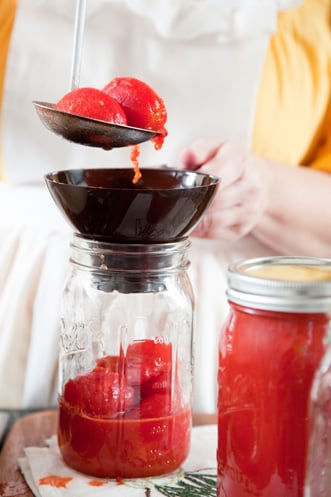
Fill one jar at a time: use a jar lifter to remove a hot jar from hot water, pouring out the water inside the jar. Fill it with the prepared food using a funnel, leaving the headspace recommended in the recipe. The rule of thumb is: 1/4 inch headspace for jams and jellies; 1/2 inch headspace for fruits (including tomatoes), pickles, salsa, and sauces; 1 inch headspace for low acid, pressure-canned fruits. If there is too much air space between the food and the lid, a discoloration in the top of the product may result.

Step 8: Remove the Air Bubbles
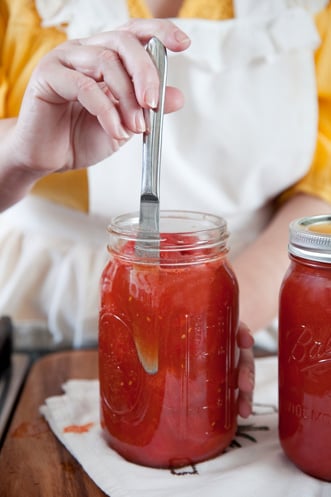
Remove air bubbles that are trapped between pieces of food by sliding a table knife or plastic spatula between the food and the jar. Wipe the rim and threads of the jar with a damp cloth to remove any residue. Lift a lid from the hot water; center the hot lid on the jar allowing the sealing compound to come in contact with the jar rim. Apply the screw band, and screw onto the jar just until resistance is met.

Step 9: Place the Filled Jars Into the Hot Water
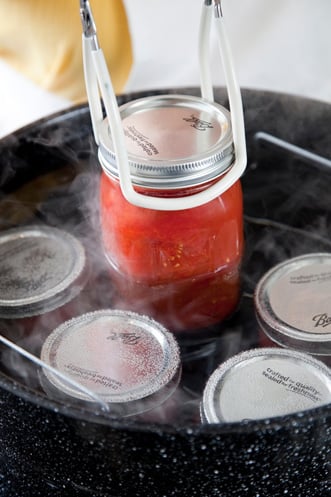
Place the jars, as they are filled, in the canner until all jars are filled or the canner is full. Check the water level in the canner: for the hot-water-bath canner, water should cover the jars by 1 or 2 inches. For the pressure canner, the water level should be 2 to 3 inches high or what is recommended in the manufacturer’s instructions.
Step 10: Process
Hot-water-bath canner: Place lid on canner. Bring water to a full rolling boil and begin the processing time indicated in the recipe, adjusting for altitude. When the processing time is finished, turn off the heat and remove the canner lid. Allow the jars to stand in the canner for 5 minutes.
Pressure canner: Lock the canner lid in place, leaving the vent pipe open. Turn up the heat to medium-high and allow the steam to escape. When there is a steady stream of steam escaping, allow to vent for 10 minutes to make sure steam, not air, is left in the canner. Close the vent and process using the method described in the manufacturer’s instructions and the recommended pounds of pressure and time indicated in the recipe. When the processing time is finished, cool the canner by removing it from the heat. Let the canner stand, undisturbed, until the pressure returns to zero all by itself. Wait 2 minutes and remove the lid as instructed by manufacturer.
Step 11: Remove and Cool
Use the jar lifter to remove the jars from the canner. Place them on a towel to prevent breakage when the hot jars come in contact with the countertop. Let them stand, undisturbed, 12 to 24 hours. Do not attempt to retighten screw bands.
Step 12: Check Seals
Make sure all jars have sealed by testing the seal: Remove the screw bands and press the middle of the lid. It should not pop up or spring back when you remove your finger. Also, the lids should not lift off with your fingertips. If unsealed, immediately reprocess or refrigerate and eat right away.
Store the processed jars in a clean, cool, dark, dry place for up to 1 year. The ideal temperature for storing canned food is between 40 degrees F. and 70 degrees F.
Get started with a canning kit!
Put up some of your own canned goodness today using Paula’s recipes:
Canned Tomatoes
Strawberry Balsamic Jam
Blackberry Jam
Raspberry Fig Preserves
Suzie’s Peach Pickles
Green Tomato Chutney
Strawberry-Apricot Preserves
Blueberry Lemon Preserves
Read More From Cooking Basics.
Bobby’s Goulash
View Now
Frozen Hot Chocolate
View Now
Aunt Peggy’s Orange Glazed Ham Steak
View Now
Quick Crab Stew
View Now
Dear Paula, Your recipt for canning tomatoes was interesting. I've been canning for over 50 years, this is the first time I've ever heard of adding lemon juice to tomatoes. As for adding the water I add it mine, it will cook away as you are cooking the tomatoes leaving just the tomatoe juice. I like your way. My mom did hers in a large dish pan. She would peel and quarter the tomatoes, and fill the pan about 3/4 full adding just enough water to cover the tomatoes. She would then put them on the stove with the burner on high until they started to boil, a this time if she could not stir them down she would start to time for 21 minutes. She would use 1/2 tsp salt for pints and 1 Tbsp salt for quarts, this she would put in the bottom of the jars before she added the tomatoes. I'm going to try your way, and I'll let you know I liked it. I don't get to watch your show as much as I would to, but ever chance I get I do. Best reguards, Sue Miers Houston, Texas
By Sue Miers on April 14, 2012
My husband and I can anything and everything. We do the canning together. We are retired and we love doing things together. It wouldn't be the same doing it alone. We have apple, cherry and pear trees and we can all the fruit. We have blueberry, elderberry, red raspberry, blackberry and muscadine grapes and we make all of the jams and jellies. What we don't raise ourselves we buy at local farmer's markets. Two years ago we won the Grand Champion ribbon at our local County Fair in the food preservation section for our zucchine relish. That was exciting. To ya'll happy canning Joe and Ann
By Anna Parham on March 16, 2012
We moved up to Ohio almost 2 years ago. The first year we missed the harvest but last year we were able to take full advantage. Being in farm country we get produce that is absolutely fantastic. I cooked 84 pounds of tomatoes into sauce and canned those. We also canned preserves and whole tomatoes and pickled veggies as well as peppers and anything else we could get fresh. What we didn't can I blanched and sealed in my vacuum sealer and froze. We have been enjoying the fruits of our labors all winter long. There's nothing like taking a package of sweet corn from the freezer and having it taste like it was just picked. We have a lot of roadside stands where the farmers sell to the public and they cannot be beat for flavor, freshness and price. By the way we also can my chili using a water bath canner. You have to process it longer but it works well. I would like to add that we have a smooth top electric range and have had no trouble with the canner and burners what so ever.
By Gary Hauter on March 15, 2012
Do you have a good recipe for diabetic raspberry jam, cooked not freezer jam?
By Diane Burgess on March 15, 2012
Paula I can everything I can. Tomatoes , pickles, Green Gold ( tomatoe relish) our family can't live without it. Green beans ,carrots,some jelly and preserves. With the food prices going so high I feel I can't throw any thing away. My husband always plants enough garden to supply several families. We enjoy playing with our food. Love you and your boys !
By Linda Leathers on March 15, 2012
I can my own vegies and sauce, every year. My Grandmother taught me and I have been doing this for years. I have alot of fond memories of helping my grandmother can. I have been saying for awhile they need to do a show on the food network on Home Canning. I get asked all the time to teach people and it is not as hard as everyone thinks. Lol
By Susanne Loud on March 15, 2012
I am looking for a relish recipe for beet greens. Any ideas?
By Katherine on February 11, 2012
is it ok to leave the screwband on after the hot water bath process? also do the screw band and lid need to be wiped dry before placing them on the filled jars after removel of bubbles?
By rose blackhorse-gill on January 12, 2012
dear paula love all your recipes would love to visit your resteraunt but unfortunatly dont have the money , i buy alot of your products they are great and love to watch you on tv, well have a happy new year. terry
By terry tatro on January 02, 2012
do you have steps on how to bottle fruit syrups? I want to make a bunch of all natural cocktail syrups that don't have to be refrdigerated for gifts.
By peggy on October 04, 2011
Do you have a recipe for pickled jalapeno peppers also can you freeze them????Thank you so much
By bobbiemoritz on October 03, 2011
Can you and if you can, tell me if and how you "can" or freeze mushrooms?
By Yvonda Hawkins on August 21, 2011
Paul can you can chili. Thanks william
By William on August 01, 2011
Paula, I finally got my 82 year old mama to come over and teach me, my daughter-in-love, and my grandchildren how to can. Even the 3 yr old "cracked" green beans. What a treasure! We put up peaches, green beans, and some corn. I'm tired but I wouldn't take a million dollars for our time together.
By Kathy on August 01, 2011
Canned green beans and make plum jelly . Also froze peas,butterbeans,corn, peaches and tomatoes. I always can and freeze vegetables for my family. It is really nice to have it in the freezer.
By Sandra Hutchinson on August 01, 2011
Where can you fine the funnel I haven't been able to fine them hope you can help me out I love to can I do tomatoes. I plant a garden every year. Aug 1,2011
By MaryRotruck on August 01, 2011
I have always wanted to can my killer applesauce, but don't know what rules to follow. Just kinda nervous overall and don't want to get more equipment than I need. Any advise on Applesauce?
By Beverly on August 01, 2011
Hey Tiffanie and Marie! Tiffanie, you really need to follow the manufacturers instructions that pertain to your specific pressure cooker. Basically, the reason we use a pressure canner vs the water bath method is bacteria. When you use the pressure canning method, the temperature can reach up to 240ºF inside and kill bacteria. We use the water bath method of canning when we don't need to reach such a high temperature because the food we are canning contains a lot of acid and acid naturally kills bacteria. So,just a simple answer here for you Marie, if the food you wish to can is high in acid –like fruits, water bath canning is perfect and Paula's preferred choice. If you are canning foods with a low or no acid content, like vegetables and meats, a pressure canner is preferred. I hope this helps and above all, don't be frightened or intimidated. Canning is really quite simple and gives so much satisfaction in the end.
By Libbie Summers, Senior Food Editor for Paula Deen on July 24, 2011
I have an electric pressure cooker that has a "canning" button (but no instructions or recipes on how to can other than only being able to use the pints, not quarts). Can someone please tell me how to adapt the instructions so that I can use this option? I really am excited to learn!!! Thanks!
By Tiffanie on July 07, 2011
Hi Paula, I've been married for almost forty years and have canned for thirty- five years , I've always added - 1 level teaspoon of salt and one level teaspoon of sugar to my 1 quart of tomatoes. I then wipe the rim clean so no granules are left on rim. It makes a huge difference to the taste . Try it! Love you Paula!
By Gail Bass on July 07, 2011
Hey Cheryl! Yes, you can process Katie’s pickled vegetables in a water bath for shelf storage.
Libbie Summers, Senior Food Editor to Paula Deen
By Libbie Summers on August 03, 2010
Can you process the pickled veggies of Katie’s in a water bath to make them last longer and not have to be refrigerated until opened?
Thanks for you time and attention
By Cheryl Brown on August 03, 2010
Now I need a video to show me how to safely can the chicken stock.Please
By Tonia on July 31, 2010
i have a ideal that helps a lot canning i jest dont have the money to patten it i’d love to shar it with you maybe you can and i jest love your sit
By Gary brewer on July 30, 2010
Hello Paula! I love making pickles, but I am looking to make a Southern pickle called Jump-Back pickles. Have you heard of them? We love tous recipes!!
By maryellen mcdowell on July 25, 2010
Hey Carmelita! Check out the current issue of Cooking with Paula Deen Magazine July/August 2010 for a pickled watermelon rind recipe!
By Libbie Summers, Senior Food Editor for Paula Deen on July 12, 2010
Dear Paula, do you by any chance have a recipe for pickled Watermelon Rinds. (The white Part of the Melon). When I lived in Aberdeen South Dakota for 9 months about 20 yrs ago, my Sister-in-Laws Mother made the most delicious pickled Watermelon Rinds and I have yet to taste any as delicious as her hers! She was generous with her pickled rinds but a stingy with the recipe and wouldn’t share it! Nor would I if I had it!!
Thank you Paula, enjoy your day! Carmelita from Brentwood, CA
By Carmelita Ruelas on July 09, 2010
The USDA guide to home canning is available from the University of Ga. Website. They recommend using a plastic spatula rather than the metal knife pictured to keep from making small scratches on the inside of your jar which could affect the integrity of the equipment. They also recommend the addition of 1 T. lemon juice for pints and 2 T. for quart jars of tomatoes to be sure they are high acid enough to process in a boiling water bath. There are also recommendations for ascorbic acid and vinegar, but lemon juice is the easiest for most folks to obtain and I don’t really see how it affects the flavor. Be sure to use research based information when doing your home canning!
By bess whitt on July 06, 2010
Great article, very clear and easy for anyone to follow even if they are not a canner.
By Sue Truelvoe on July 06, 2010
My Recipe Box | Log in to view
Watch Bobby’ Deen’s brand new show,“Not My Mama’s Meals”, on the Cooking Channel every Wednesday at 9 PM ET. Follow Bobby on Twitter: @BobbyDeen
Paula will launch a week of cooking around America on ABC’s “The Chew.” Check local listings for time and channel.
Paula will be on The TODAY Show in the 8 and 9 am hours. Check local listings for channel.
Join Paula and Jamie for a book signing at Uncle Bubba’s Oyster House in Savannah from 10 am to 12 pm. Only 350 tickets will be given out starting 1 hour before the book signing. No cameras permitted; a professional photographer will be on site to take your photo.
This time, the drive will be held at three locations: The Lady and Sons and the Inn at Ellis Square from 9am-5pm and Uncle Bubba’s Oyster House from 12pm-5pm. Please visit redcrossblood.org and use the sponsor code “butter”, or call 1-800-REDCROSS (1-800-733-2767) to make an appointment. Each presenting donor will receive a limited edition apron signed by Paula Deen; a $40 gift card to be redeemed at Lady and Sons, Uncle Bubba’s, or Paula Deen Retail Store good from 06/15 through 06/17 only; and Lady and Sons signature gooey butter cakes in the canteen.
Join Paula, Bobby and Jamie for a book signing at the Lady and Sons restaurant in Savannah from 2 to 4 pm. Only 350 tickets will be given out starting 1 hour before the book signing. No cameras permitted; a professional photographer will be on site to take your photo.
Leave a Comment